The injections wore off. PT didn't hold. The painkillers just dull a day you can't enjoy anyway. And now someone in a white coat is talking about cutting into your spine. There's another door — and most people are never shown it.
You've tried physical therapy. You've tried the cortisone shot — twice. Maybe a muscle relaxer that knocks you out by 8pm. None of it touched the real problem, because none of it changed the one thing that actually matters: the pressure inside your disc.
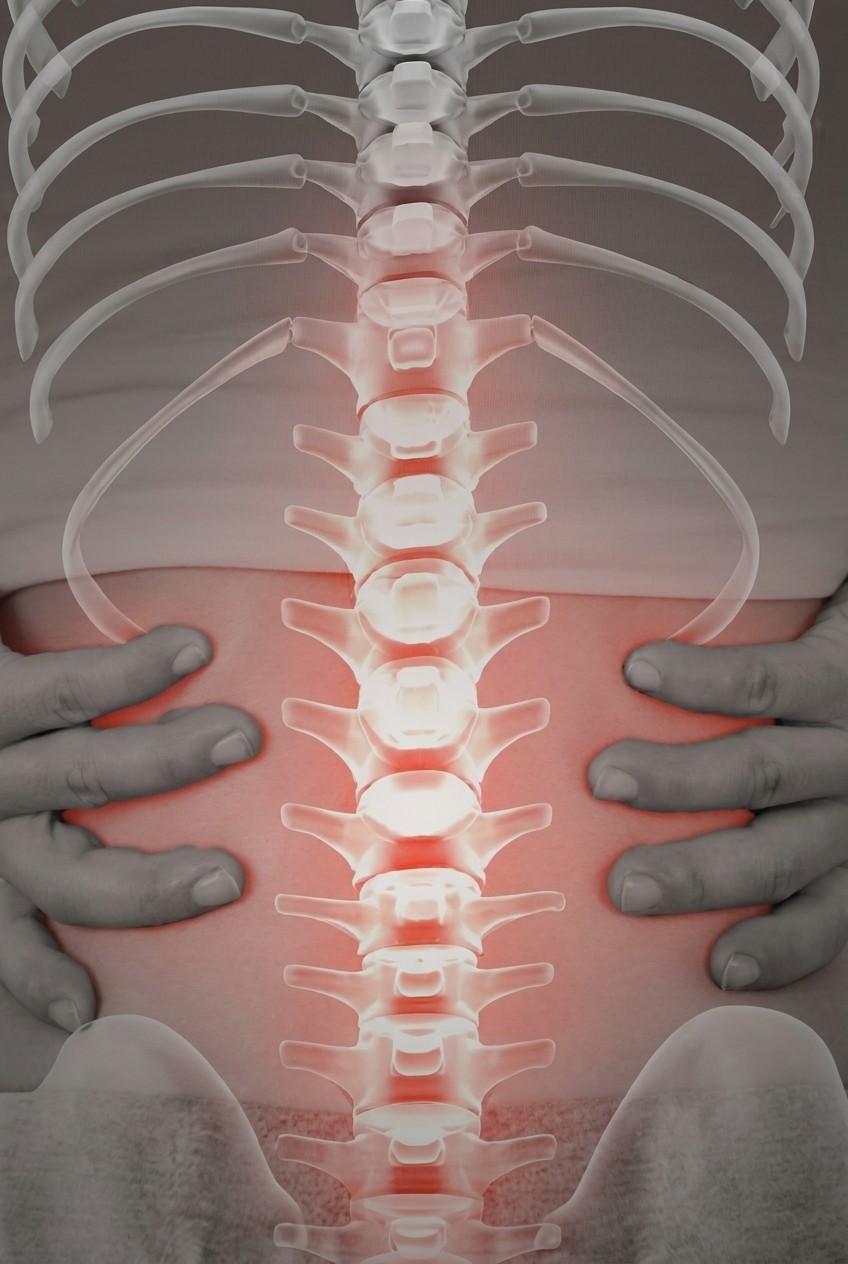
Here's what almost no one explains about a herniated or bulging disc. The disc is being crushed between two vertebrae. That pressure pushes the soft inner material outward, where it presses on the nerve root behind it. Every painkiller in your cabinet is fighting the smoke. Nobody's putting out the fire. Stretches and exercises can help the muscles around it — but they can't pull the bones apart far enough to give that disc room to breathe.
Until you take the pressure off the disc, the disc can't heal — and the nerve can't stop screaming.
These aren't bullet points from a textbook. They're what your week actually looks like.
Here's what a session actually feels like. You lie down on a computerized decompression table — fully clothed, face up. We fit a soft harness around your pelvis. You don't have to do anything. The table does the work.
Then it begins: a slow, rhythmic stretch and release, dialed in precisely to your spine and your condition. The pull is gentle. Most patients close their eyes. Some fall asleep. While you rest, the table is doing something nothing else in medicine can do — pulling your vertebrae apart just enough to create negative pressure inside the disc, drawing the bulge back in and pulling oxygen, water, and nutrients into tissue that's been starved for years.
Sessions run 20 to 45 minutes. A typical plan is 15 to 25 sessions over 4 to 6 weeks, often combined with adjustments and cold laser therapy so your spine doesn't just feel better — it rebuilds.
Schedule a Consultation

No long sales pitch — just what people actually say when they tell their friends what finally worked.
Tell us where it hurts, what you've already tried, and what your doctor has said. We'll be straight with you about whether decompression is the right tool for your case — and if surgery or another option is a better fit, we'll tell you that too. Before you sign anything, get a second opinion that doesn't involve a scalpel.